Ep 101 | The “What If” Myth: Why Achieving Your Goals Won’t Create Lasting Happiness

Share the inspiration:

Find Joy Right Now—Break Free from the “What If” Trap!

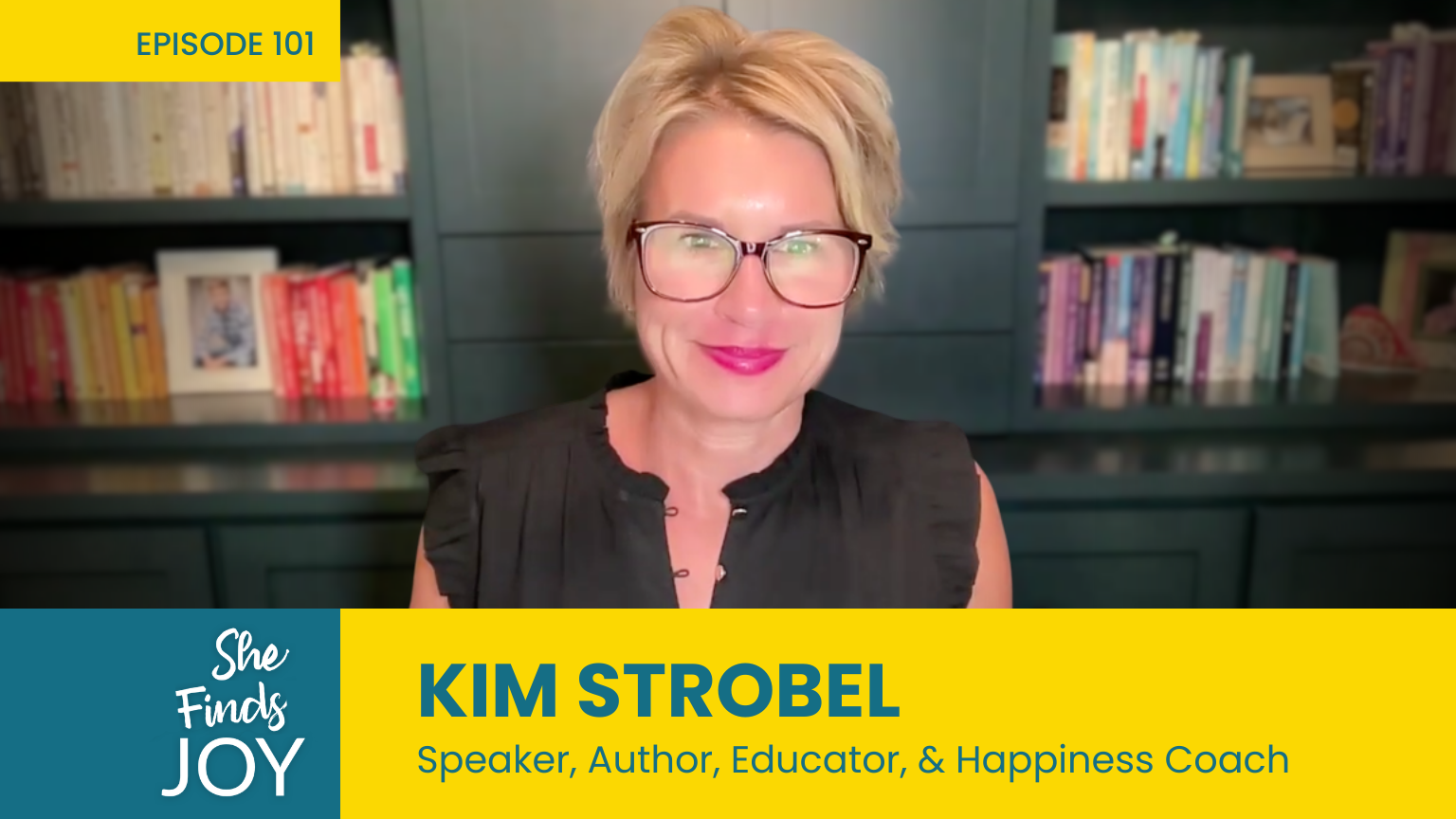
How many times have you told yourself, “If I just land that dream job… lose the weight… buy the house… *then* I’ll be happy?” If you’ve ever found yourself playing the “what if” game with your happiness, you’re in good company. In Episode 101 of She Finds Joy Podcast, Kim Strobel cracks open the truth about why so many of us chase a moving target—and what it really takes to feel fulfilled.

The Lie We Tell Ourselves About Happiness

Kim Strobel calls it out: tying our happiness to a future achievement is like running on a treadmill that never stops. Sure, you hit that income goal, drop the pounds, or book the bucket list vacation and, for a moment, all feels right with the world. But soon, your brain moves the goalpost. You start chasing the next “fix.” This, Kim Strobel explains, is hedonic adaptation—a built-in feature of human psychology that keeps us striving for more, but rarely lets us sit in contentment.

Why Goals Alone Won’t Do It

Humans thrive on ambition—we need goals. But Kim Strobel urges us to stop deferring happiness until after we reach them. The science of positive psychology (yep, there’s 40+ years of it!) finds that long-lasting joy comes from something deeper than achievement. It comes from daily habits, mindset, meaning, and yes, sometimes just pausing long enough to soak in the good of *right now*.

Take the “Joy Inventory”—Where Do You Stand?

Ready for a reality check? Kim Strobel recommends Martin Seligman’s PERMA Profiler (it’s a quick online quiz—we linked it in the show notes) to see where you stand in five crucial pillars of well-being: Positive emotion, Engagement, Relationships, Meaning, and Accomplishment. No judgment, just data. The results? Eye-opening, and precisely the nudge most of us need to shift from “waiting to be happy” to *actually being happy*.

The Real “Happiness Advantage” Isn’t What You Think

Forget the checklist for a second and ask yourself: Can you find something to feel good about today, even if life isn’t perfect yet? Kim Strobel reminds us that those who “outperform” in life aren’t just luckier or smarter—they’re practicing daily habits that build vitality, joy, creativity, and meaning, *while* still pursuing their boldest goals.

Quick Win: Interrupt the “If Only” Cycle

As you map out this year’s ambitions, pause and ask: “Where am I already thriving?” Journal three ways you’re already engaged, connected, or finding meaning where you are. Can you celebrate a small win? Savor a relationship? Reframe an everyday struggle as a building block for long-term joy? The science (and Kim Strobel!) say: it works.

Share Joy—Amplify the Ripple

Find this episode encouraging? Don’t keep it to yourself—share this blog with friends, fellow goal-getters, and anyone stuck in the cycle of someday happiness. Invite them to tune in to She Finds Joy Podcast, dive deep with Kim Strobel, and reimagine what joyful living looks like, right now.

Punchline for the Growth Seeker:

Happiness isn’t on layaway—your joy belongs in the present. The more you find it now, the faster you attract even more reasons to celebrate. This is your year to flourish!

Inspired? Pass it on and let’s find joy—today, together!

Hey Friends! Welcome to Episode 101 of the She Finds Joy Podcast—the home for bold insights, powerhouse mindset shifts, and a whole lot of permission to be happy right where you are. This week, Kim Strobel dives deep into a subject we ALL wrestle with: tying our happiness to “someday” and the myth that achievement equals joy.


If you’ve ever caught yourself saying, “I’ll be happy when…”, this episode will shake up your thinking and challenge everything you’ve believed about goals, dreams, and what actually makes life worth living. Kim Strobel drops real talk, science-backed wisdom, and a call to action to stop robbing yourself of happiness—and start creating it now.


In This Episode:


  • The What-If Game: Are you postponing joy? Kim Strobel explains how “I’ll be happy when…” thinking tricks your brain into moving the goalpost again (and again!)—and why it never truly satisfies.  
  • Hedonic Adaptation—The Happiness Trap: Learn about the science behind the “hedonic treadmill” and why every achievement soon feels “not enough”—from bigger paychecks to smaller pants sizes.  
  • Can You Have Goals AND Live Happy Now?: Absolutely yes! Kim Strobel shares how to pursue growth and big dreams while making room for happiness in the present.  
  • Introduction to Positive Psychology: Discover how 40+ years of research pinpoints the real habits and strategies that fuel lasting joy and meaning—beyond surface-level success.  
  • The PERMA Profiler Test: Get curious about your own happiness! Kim Strobel introduces Martin Seligman’s five pillars of well-being—and invites you to take the “PERMA Profiler” happiness quiz to discover where you shine and where you can grow.


Power Moves:


  • Notice Your “What If”s: Where in your life are you waiting for happiness? Write them down—and challenge the story.  
  • Shift the Formula: Stop tying your joy to the next achievement. Start looking for what lights you up right now.  
  • Dive Into the Science: Google “PERMA Profiler Martin Seligman,” sign up, and get your snapshot for real-time awareness—no shame, all curiosity!  
  • Reflect, Don’t Judge: Use your quiz results as a springboard for growth—not for comparison or guilt.  
  • Get Ready for What’s Next: Kim Strobel promises to unlock the real happiness boosters in upcoming episodes—don’t miss it!


Mic-Drop Quotes:


“You’re robbing yourself of all of your happiness in the now.”  

“Hedonic adaptation means we simply adjust to the new level, and then it’s not enough anymore.”  

“It’s not about not wanting things—it’s about not outsourcing your joy to them.”  

“Positive psychology is about what makes life worth living—and it’s a field built on evidence, study, and lived experience.”


Listener Challenge:


👉 Take the PERMA Profiler quiz this week—get honest with yourself and get empowered, not shamed!  

👉 Notice every time you think, “I’ll be happy when…” and gently bring your joy back to the present.


Share & Connect:


Screenshot your favorite insight, tag @KimStrobelJoy on Instagram, and share which PERMA pillar you’re most curious to uplevel. Invite a friend who’s always chasing happiness to join the joy revolution! Don’t forget to subscribe and leave a review at kimstrobel.com/review—next episode is going to be a happiness game-changer.


You can be joyful, fulfilled, and ambitious—all at once. Your best life doesn’t start “someday”—it starts now.


With huge love and happiness in the NOW,  

Kim


Listen in, reflect, and let’s rewrite your happiness story—together!

In today’s episode, we’re going to talk about happiness. And I’m so excited to tell you a few things about how this happiness formula tends to work in most of our minds. You see, what I tell people is we play the what if game with happiness. We say, if I could just lose the weight, I’d be happy. When I get a job, that I make more money, I’ll be happier. When we can afford a bigger home, I’ll be happier. If we could go on better vacations, I’d be happier. When I find the right mate or the right partner, I’ll be happier. And what we’re doing, folks, is there’s two things there that are myths. And the one is you’re tying your achievement, you’re tying your happiness to the achievement of a goal. You’re saying, I’m not going to be happy until this particular thing happens. And so there’s an issue with that because what that means, folks, is you’re robbing yourself of all of your happiness in the, in the now.

I’m not saying that life needs to feel perfect or be perfect in order to have that. What I am saying is that even when you don’t have everything that you want yet, which by the way, a lot of the things that you want aren’t going to contribute to long term happiness, it’s okay to want them. It’s okay to want a large house. I have a wonderful, big, beautiful, large house. I love it very much. It’s the problem is, is when you tie your happiness to the achievement of a goal, you’re missing out on all of your happiness in the now, Right? People to find their happiness in the now, why they’re reaching for that goal.

We know that humans need to have goals. This is what makes us feel fulfilled. It gives us meaning, it gives us purpose. The problem is, is so many times what we think will really make us happy doesn’t last. It doesn’t last. And so we play this what if game with happiness. When I get this job, I’ll be happy. When I find the right partner, I’ll be happy. When we can buy this home, I’ll be happy. When we have the 2.5 kids, I’ll be happy. When I lose the weight, I’ll all be happy. And so the problem with this, folks, is that you’re tying your happiness to the achievement of a goal. And I want you to have goals and have big goals, but I don’t want you to tie your happiness to the achievement of that goal. Because what happens Folks, is we have hedonic adaptation. And hedonic adaptation is this internal mechanism that we have inside of us where we literally simply change the goalpost.

And so I want you to think of it like this. Have you ever been, like, outside in a frigid, cold air, and then you’re so cold, and you come in and you sit by the fire and you start to warm up and you’re like, this feels so good. It feels so toasty. And then after a few minutes, you’re like, okay, I’m done with that. It doesn’t feel so great yet. And you step away from the fireplace. That’s because as human beings, we have inside of us hedonic adaptation, which means we simply adjust to the new level. Okay?

And so what happens, folks, is you say, listen, if I could just make 100k a year, I’d be happy. And I’m going to tell you, you hit 100k and your brain’s going to go, this is great. This is awesome. This feels good. And after a fairly short period of time, your brain is going to say, oh, now I need to move the goal post. Now I need 125 to be happy. Like, now I want to go further. Now I need even more. Or you lose 10 pounds. That was your goal. And you’re like, this feels good. And you get to ten pounds and you’re like, oh, I just need five more pounds. If I could just. So our brain constantly recalibrates and it constantly moves the goalpost over and over and over again, which is why so many of the things that we think will bring us happiness don’t bring us lasting happiness. It’s wonderful to have those things.

There’s nothing wrong with losing weight and feeling good about it. There’s nothing wrong with wanting to make more money. I love to make money. There’s, it’s, it’s. It’s buys immense freedom in my life. But the issue is, is when you are counting on that thing to elevate your happiness. And so, as we go through some of these next podcast episodes, I’m going to be talking to you about what really does contribute to long lasting, longer increasing levels of happiness and what really doesn’t. But for now, I just want you to think about, do you play that what if game with happiness? And if so, if so, how can you change that? How can you not tie your happiness to the achievement of goal of that goal? And how can you find your happiness in the now? Because that’s what we’re really looking at. And so I’m going to leave this short and sweet today because I only want you thinking about how do you play the what if game with happiness? Okay? And in these following episodes, I’m going to teach you what really does contribute to increased happiness levels and what doesn’t.

But before we do, I want you to think about filling out one of these happiness quizzes that I recommend. So one of my favorites is from Martin Seligman, okay? And Martin Seligman is like the grandfather of positive psychology. And positive psychology is the psychology of what makes life worth living. It comes from empowering people to develop a positive state of mind, to live the most rewarding and happiest life they can. And what we know is that there are certain happiness boosting strategies that are effective, that you can learn to enjoy and you can increase your happiness if you’re willing to do the work. And so positive psychology is basically this scientific field of study that’s been done for 40 plus years that studies the strengths that enable individuals and communities to thrive. And so basically what they’ve done are these highly vetted studies where they look at all these dynamics.

What are the social economical dynamics, what kind of money did these people make, what kind of jobs did they have, what kind of families did they have? And they began to group people of similar demographics, economics and so forth. And what they did is they studied those people over a period of years and they started paying attention to which ones are outperforming everybody else, which ones have more vitality, more energy, more creativity, more success, more meaning, what makes those people, why are they outperforming everyone else?

And that is how the field of positive psychology was born. Because they started to see that those people that were outperforming, that were living these very flourishing, meaningful, positive, energetic lives, were actually cultivating a set of habits that were enabling them to perform and experience life at this level. And so we’re going to be diving into that. But I want you to go to Martin Seligman’s happiness quiz. It’s called the Perma Profiler.

P E R M A profiler. We’re going to drop a link in the show notes right now. I’m going to look it up. It’s called the Perma Profiler. And you go to what is called the Positive Psychology center from Penn State. Okay? And so Martin Seligman, if you just simply Google Perma profiler, Martin Seligman, and he created a test that is kind of like a quiz that is actually going to give you an evaluation of what are the five pillars of well being that he calls perma positive emotion for the P, engagement for the E, relationships for the R, M for a meaning for meaning and a for accomplishment. And I just want you to find this quiz. You do have to create a login at the University of Pennsylvania, and you’re going to see lots of quizzes, but I want you to find the perma one, and it’s going to give you a snapshot of where you are right now, of where your happiness levels might be.

How much positive emotion do you have in life? How engaged are you in life? What kind of meaningful relationships do you have in life? We’re not using this to shame or to judge, but it’s just kind of interesting to see where you are and then it shows you the areas you can work on. And so in this particular episode, I simply wanted to explain how we play the what if game with happiness and the troubles that we run into when we do that, because we’re never satisfied, because the hedonic treadmill goes on and on and on, and we simply move the goalpost and we say, now, in order to feel happy, I need this. And so in these following episodes, we’re going to talk about which. Which things really do increase your happiness levels and which things don’t. And you’re going to be shocked to discover the ones that don’t.

Hey Friends! Welcome to Episode 101 of the She Finds Joy Podcast—the home for bold insights, powerhouse mindset shifts, and a whole lot of permission to be happy right where you are. This week, Kim Strobel dives deep into a subject we ALL wrestle with: tying our happiness to “someday” and the myth that achievement equals joy.


If you’ve ever caught yourself saying, “I’ll be happy when…”, this episode will shake up your thinking and challenge everything you’ve believed about goals, dreams, and what actually makes life worth living. Kim Strobel drops real talk, science-backed wisdom, and a call to action to stop robbing yourself of happiness—and start creating it now.


In This Episode:


  • The What-If Game: Are you postponing joy? Kim Strobel explains how “I’ll be happy when…” thinking tricks your brain into moving the goalpost again (and again!)—and why it never truly satisfies.  
  • Hedonic Adaptation—The Happiness Trap: Learn about the science behind the “hedonic treadmill” and why every achievement soon feels “not enough”—from bigger paychecks to smaller pants sizes.  
  • Can You Have Goals AND Live Happy Now?: Absolutely yes! Kim Strobel shares how to pursue growth and big dreams while making room for happiness in the present.  
  • Introduction to Positive Psychology: Discover how 40+ years of research pinpoints the real habits and strategies that fuel lasting joy and meaning—beyond surface-level success.  
  • The PERMA Profiler Test: Get curious about your own happiness! Kim Strobel introduces Martin Seligman’s five pillars of well-being—and invites you to take the “PERMA Profiler” happiness quiz to discover where you shine and where you can grow.


Power Moves:


  • Notice Your “What If”s: Where in your life are you waiting for happiness? Write them down—and challenge the story.  
  • Shift the Formula: Stop tying your joy to the next achievement. Start looking for what lights you up right now.  
  • Dive Into the Science: Google “PERMA Profiler Martin Seligman,” sign up, and get your snapshot for real-time awareness—no shame, all curiosity!  
  • Reflect, Don’t Judge: Use your quiz results as a springboard for growth—not for comparison or guilt.  
  • Get Ready for What’s Next: Kim Strobel promises to unlock the real happiness boosters in upcoming episodes—don’t miss it!


Mic-Drop Quotes:


“You’re robbing yourself of all of your happiness in the now.”  

“Hedonic adaptation means we simply adjust to the new level, and then it’s not enough anymore.”  

“It’s not about not wanting things—it’s about not outsourcing your joy to them.”  

“Positive psychology is about what makes life worth living—and it’s a field built on evidence, study, and lived experience.”


Listener Challenge:


👉 Take the PERMA Profiler quiz this week—get honest with yourself and get empowered, not shamed!  

👉 Notice every time you think, “I’ll be happy when…” and gently bring your joy back to the present.


Share & Connect:


Screenshot your favorite insight, tag @KimStrobelJoy on Instagram, and share which PERMA pillar you’re most curious to uplevel. Invite a friend who’s always chasing happiness to join the joy revolution! Don’t forget to subscribe and leave a review at kimstrobel.com/review—next episode is going to be a happiness game-changer.


You can be joyful, fulfilled, and ambitious—all at once. Your best life doesn’t start “someday”—it starts now.


With huge love and happiness in the NOW,  

Kim


Listen in, reflect, and let’s rewrite your happiness story—together!

In today’s episode, we’re going to talk about happiness. And I’m so excited to tell you a few things about how this happiness formula tends to work in most of our minds. You see, what I tell people is we play the what if game with happiness. We say, if I could just lose the weight, I’d be happy. When I get a job, that I make more money, I’ll be happier. When we can afford a bigger home, I’ll be happier. If we could go on better vacations, I’d be happier. When I find the right mate or the right partner, I’ll be happier. And what we’re doing, folks, is there’s two things there that are myths. And the one is you’re tying your achievement, you’re tying your happiness to the achievement of a goal. You’re saying, I’m not going to be happy until this particular thing happens. And so there’s an issue with that because what that means, folks, is you’re robbing yourself of all of your happiness in the, in the now.

I’m not saying that life needs to feel perfect or be perfect in order to have that. What I am saying is that even when you don’t have everything that you want yet, which by the way, a lot of the things that you want aren’t going to contribute to long term happiness, it’s okay to want them. It’s okay to want a large house. I have a wonderful, big, beautiful, large house. I love it very much. It’s the problem is, is when you tie your happiness to the achievement of a goal, you’re missing out on all of your happiness in the now, Right? People to find their happiness in the now, why they’re reaching for that goal.

We know that humans need to have goals. This is what makes us feel fulfilled. It gives us meaning, it gives us purpose. The problem is, is so many times what we think will really make us happy doesn’t last. It doesn’t last. And so we play this what if game with happiness. When I get this job, I’ll be happy. When I find the right partner, I’ll be happy. When we can buy this home, I’ll be happy. When we have the 2.5 kids, I’ll be happy. When I lose the weight, I’ll all be happy. And so the problem with this, folks, is that you’re tying your happiness to the achievement of a goal. And I want you to have goals and have big goals, but I don’t want you to tie your happiness to the achievement of that goal. Because what happens Folks, is we have hedonic adaptation. And hedonic adaptation is this internal mechanism that we have inside of us where we literally simply change the goalpost.

And so I want you to think of it like this. Have you ever been, like, outside in a frigid, cold air, and then you’re so cold, and you come in and you sit by the fire and you start to warm up and you’re like, this feels so good. It feels so toasty. And then after a few minutes, you’re like, okay, I’m done with that. It doesn’t feel so great yet. And you step away from the fireplace. That’s because as human beings, we have inside of us hedonic adaptation, which means we simply adjust to the new level. Okay?

And so what happens, folks, is you say, listen, if I could just make 100k a year, I’d be happy. And I’m going to tell you, you hit 100k and your brain’s going to go, this is great. This is awesome. This feels good. And after a fairly short period of time, your brain is going to say, oh, now I need to move the goal post. Now I need 125 to be happy. Like, now I want to go further. Now I need even more. Or you lose 10 pounds. That was your goal. And you’re like, this feels good. And you get to ten pounds and you’re like, oh, I just need five more pounds. If I could just. So our brain constantly recalibrates and it constantly moves the goalpost over and over and over again, which is why so many of the things that we think will bring us happiness don’t bring us lasting happiness. It’s wonderful to have those things.

There’s nothing wrong with losing weight and feeling good about it. There’s nothing wrong with wanting to make more money. I love to make money. There’s, it’s, it’s. It’s buys immense freedom in my life. But the issue is, is when you are counting on that thing to elevate your happiness. And so, as we go through some of these next podcast episodes, I’m going to be talking to you about what really does contribute to long lasting, longer increasing levels of happiness and what really doesn’t. But for now, I just want you to think about, do you play that what if game with happiness? And if so, if so, how can you change that? How can you not tie your happiness to the achievement of goal of that goal? And how can you find your happiness in the now? Because that’s what we’re really looking at. And so I’m going to leave this short and sweet today because I only want you thinking about how do you play the what if game with happiness? Okay? And in these following episodes, I’m going to teach you what really does contribute to increased happiness levels and what doesn’t.

But before we do, I want you to think about filling out one of these happiness quizzes that I recommend. So one of my favorites is from Martin Seligman, okay? And Martin Seligman is like the grandfather of positive psychology. And positive psychology is the psychology of what makes life worth living. It comes from empowering people to develop a positive state of mind, to live the most rewarding and happiest life they can. And what we know is that there are certain happiness boosting strategies that are effective, that you can learn to enjoy and you can increase your happiness if you’re willing to do the work. And so positive psychology is basically this scientific field of study that’s been done for 40 plus years that studies the strengths that enable individuals and communities to thrive. And so basically what they’ve done are these highly vetted studies where they look at all these dynamics.

What are the social economical dynamics, what kind of money did these people make, what kind of jobs did they have, what kind of families did they have? And they began to group people of similar demographics, economics and so forth. And what they did is they studied those people over a period of years and they started paying attention to which ones are outperforming everybody else, which ones have more vitality, more energy, more creativity, more success, more meaning, what makes those people, why are they outperforming everyone else?

And that is how the field of positive psychology was born. Because they started to see that those people that were outperforming, that were living these very flourishing, meaningful, positive, energetic lives, were actually cultivating a set of habits that were enabling them to perform and experience life at this level. And so we’re going to be diving into that. But I want you to go to Martin Seligman’s happiness quiz. It’s called the Perma Profiler.

P E R M A profiler. We’re going to drop a link in the show notes right now. I’m going to look it up. It’s called the Perma Profiler. And you go to what is called the Positive Psychology center from Penn State. Okay? And so Martin Seligman, if you just simply Google Perma profiler, Martin Seligman, and he created a test that is kind of like a quiz that is actually going to give you an evaluation of what are the five pillars of well being that he calls perma positive emotion for the P, engagement for the E, relationships for the R, M for a meaning for meaning and a for accomplishment. And I just want you to find this quiz. You do have to create a login at the University of Pennsylvania, and you’re going to see lots of quizzes, but I want you to find the perma one, and it’s going to give you a snapshot of where you are right now, of where your happiness levels might be.

How much positive emotion do you have in life? How engaged are you in life? What kind of meaningful relationships do you have in life? We’re not using this to shame or to judge, but it’s just kind of interesting to see where you are and then it shows you the areas you can work on. And so in this particular episode, I simply wanted to explain how we play the what if game with happiness and the troubles that we run into when we do that, because we’re never satisfied, because the hedonic treadmill goes on and on and on, and we simply move the goalpost and we say, now, in order to feel happy, I need this. And so in these following episodes, we’re going to talk about which. Which things really do increase your happiness levels and which things don’t. And you’re going to be shocked to discover the ones that don’t.

Listen on: